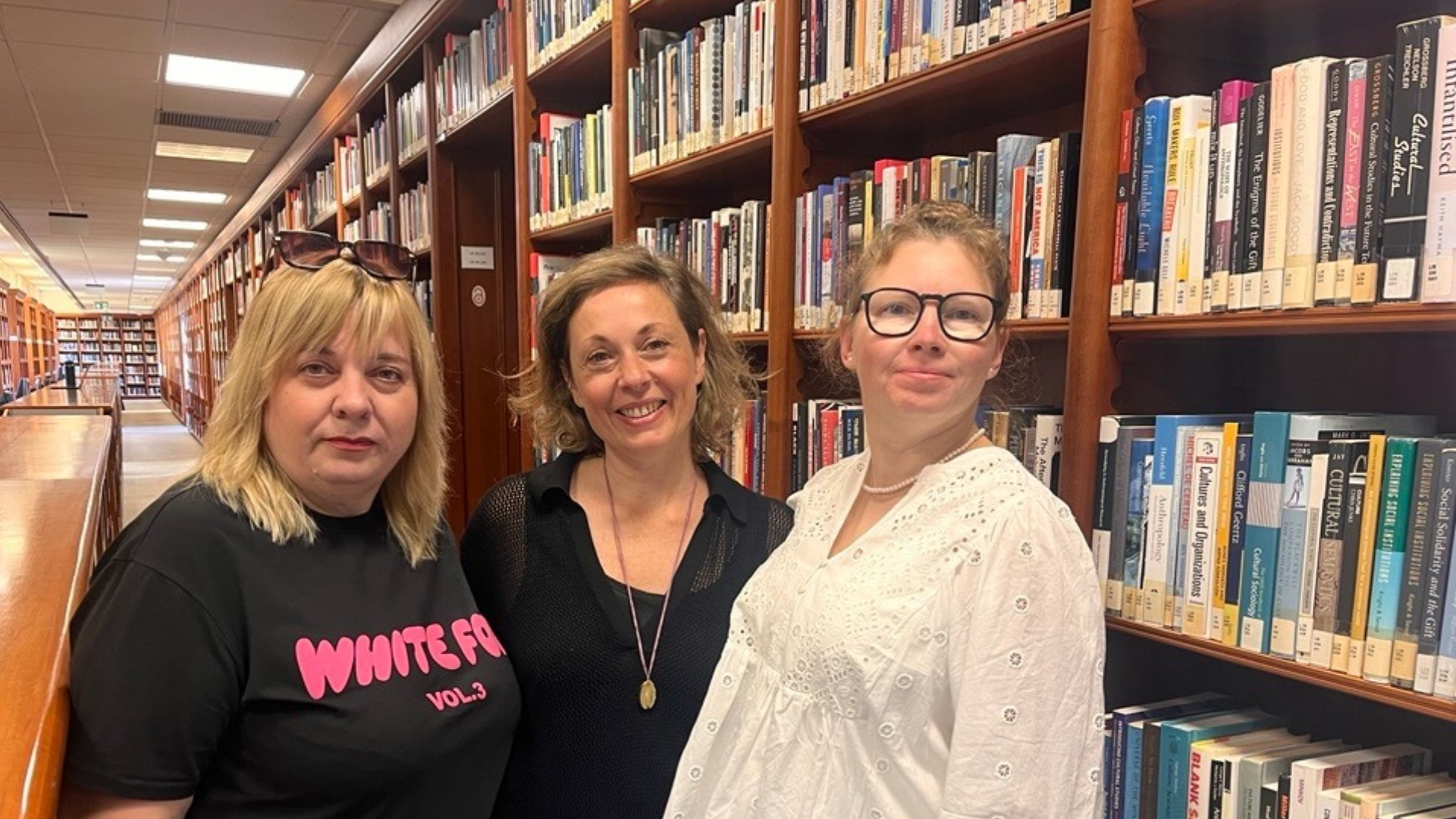
The journey from Kyiv to Florence
I had long dreamed of visiting Italy. And finally, my dream came true. In October this year, I travelled to Florence, a city I had read so much about and had always wanted to see with my own eyes.
The journey was long. As cities, landscapes and countries passed by outside the bus window, my thoughts kept returning home, to Kyiv.
I was travelling to the European University Institute to take part in a professional mobility programme. As Director of the Research Library of the Kyiv National Economic University named after Vadym Hetman, this was a wonderful opportunity for me to learn about the work of European colleagues, discover new approaches, talk to people and exchange experiences.
I had been looking forward to this trip very much. Just a few years ago, I could never have imagined that a time would come when it would no longer be possible simply to board a plane in Ukraine and fly to another country. But for more than four and a half years now, our airports have not handled passenger flights. So I travelled to Italy by bus, crossing several countries. Once, such a journey would have seemed unusual to me. Now, it is our reality.
During the journey, I thought about many things. Above all, I remembered the morning of 24 February 2022.
When everything changed
That morning, as usual, I was getting ready for work. Messages were already arriving about the start of the war, but it was impossible to believe...
I left home, walked to the public transport stop and heard explosions. I turned around and went home.
I began calling my colleagues. I wanted to know where they were, whether they were safe and what they were planning to do. That morning, like thousands of other people, I had no idea what would happen next.
Together with my family and my young grandson, we spent two days in the Kyiv metro. There were many people there, including families with children. Explosions sounded above the city, and Russian military vehicles appeared in our neighbourhood of Obolon. It was frightening. I worried most of all about my grandson.
Later, we decided to leave for Lviv. I will always remember Kyiv railway station. Huge crowds of people, suitcases, children, pets. Everyone was trying to get onto the evacuation trains. The carriages were overcrowded, but people kept getting on. No one knew when they would be able to return home.
In our carriage there was a family from Bucha. They had managed to leave at the last moment. They were in a terrible state. I particularly remember a school-age girl. She did not speak during the entire journey to Lviv. She only cried. I still remember her. More than four years have passed, but I can still see that scene today.
Lviv was also full of people who had left their homes. I continued calling members of the library staff. Gradually, we managed to find out where everyone was. Some had gone to Germany, some to France, while others had found temporary shelter in Lviv, Uzhhorod, Khmelnytskyi and Vinnytsia.
We remained in constant contact. After about a week, we were able to resume our work remotely. Everyone worked from wherever they happened to be.
Two weeks later, I returned to Kyiv. One of our first priorities was to protect the library’s most valuable publications and documents. We moved them into basement areas, hoping they would be safer there.
During the first month, almost all members of staff returned to Kyiv. Although the city remained dangerous, people wanted to be at home and return to work. Four of our colleagues are still abroad today.
Keeping the Library working during the war
More than four and a half years have passed since then. Sometimes it feels as though we have lived several lifetimes during that time.
Air-raid alerts, shelling and explosions have become part of our everyday lives. They can happen during the day, at night or early in the morning. I remember very clearly the first time I heard the air-raid siren. It was so loud that it seemed to tear through the air. That unfamiliar, piercing sound caused real fear. Back then, we did not yet know how to react, where to run or what to do.
Sadly, today everything is different. Sirens have become part of our daily lives. Sometimes they sound several times a day. We have become so accustomed to them that sometimes we barely pay attention. And perhaps that is the most frightening thing of all: that people gradually become accustomed to living in constant danger.
But there are sounds you can never get used to. One of them is the sound of a ballistic missile flying over your home. I do not know how to put that feeling into words. I think I will remember it for the rest of my life.
The war has affected our staff as well. Some had their apartments damaged; others lost their homes entirely. We collected money and helped in whatever ways we could. Of course, we could not solve every problem, but we tried not to leave people alone in their difficulties.
The library was also damaged. Blast waves damaged the windows, and problems with the heating caused radiators to burst. The rooms were left without heat.
I remember how our indoor plants froze. We had grown and cared for them for years, and they simply died from the cold. It may seem like a small thing compared with everything happening around us. But I felt very sad about those plants. Perhaps because they, too, had been part of our ordinary life, a life that the war has changed so mercilessly.
And yet, the library continues to work. Today, in fact, we are working on site. Students and lecturers come to us, we lend books, help people find academic information, organise exhibitions and meetings, work with electronic resources and continue to develop our collections.
Of course, this is our normal work. But today, even an ordinary working day can sometimes require a great deal of effort, especially after a night spent listening to explosions.
We also try to keep up with changes in our profession. We learn, master new technologies and explore the experiences of other libraries. We do not want the war to take away our opportunity for professional development as well.
A week in Florence
So when I had the opportunity to take part in a professional mobility programme at the European University Institute (EUI) in Florence, I was extremely happy.
Florence made an unforgettable impression on me. It was my first time in Italy, and everything around me filled me with awe: the old streets, magnificent buildings, squares and art that is literally everywhere you look.
And then there was ordinary, peaceful life. People walking, sitting in cafés, talking, laughing, not rushing anywhere. Church bells ringing. And you suddenly realise how long it has been since you felt such peace.
Of course, even in Florence I constantly read the news from Ukraine, called home and worried about my family and colleagues. You cannot simply switch off from the war, even when you are thousands of kilometres away from home.
The programme at the European University Institute was intensive and engaging. We explored the Library’s work and discussed technologies, services, collections, and supporting research in an international academic environment.
I was impressed by the professionalism and enthusiasm of the EUI Library staff. It was stimulating to exchange experiences, ask questions and compare the different ways we work. I discovered many ideas and approaches that I would like to bring back to my own library.
It was equally important for me to share our own experience: how we reorganised the library during the first weeks of the invasion and how we continue to serve our community, preserve our collections and sustain their research activities during the war. Our circumstances may be very different, but many of the professional challenges we face are shared.
I brought a copy of the book Treasures of Ukraine to Italy and donated it to the Library of the European University Institute. I very much wanted our Italian colleagues to learn more about Ukraine.
Today, our country is most often spoken about in connection with the war. But I want people to know another Ukraine too: a country with a rich history, culture, art and traditions, beautiful cities and talented people. The Ukraine that we love and are proud of.
Returning home
The week in Florence passed very quickly. I returned home with new ideas, happy memories and deep gratitude to the people I had met.
I will remember this week not only because of the interesting professional programme, but because of the people I was fortunate enough to meet.
I would like to mention our colleagues from Latvia, Montenegro and Ghana, who took part in the programme with us. We came from different countries, each with our own experiences, problems and expectations. Throughout the week, we talked a great deal, exchanged ideas, discussed the work of our libraries and simply talked about life. Somehow, almost without noticing it, we became close. We met as colleagues and said goodbye as true friends. I very much hope that we will meet again.
Now I am back in Kyiv. Back to work, everyday concerns and air-raid alerts. But I often think about Florence, its streets, its people and the bells of its old churches. They were loud too, but they did not cause fear. I found myself thinking how wonderful it was simply to hear the sounds of a city and not be afraid of them. Perhaps that is why those bells have stayed with me so strongly.
And I very much hope that one day we too will be able to live without fear. That our children will not cry because of explosions, that people will not lose their homes, that we will simply be able to wake up in the morning, go to work and not worry about whether all our loved ones are still alive.
We Ukrainians want the same thing that people in Italy and throughout the world want: an ordinary, peaceful life.
I am very grateful to the entire EUI Library team for their warm welcome. Special thanks to Thanasis Mourikis for supporting the preparation of our visit, and to Monica Steletti for accompanying us throughout the week, coordinating the programme and always making time for our questions. We felt welcome from the very beginning.
I would also particularly like to thank Pep Torn, Director of the European University Institute Library, who made time to meet us personally, show us around the Library, explain his work and answer our questions. His attentiveness towards us was deeply appreciated.
About the Erasmus+ Staff Week 2026
From 12 to 16 October 2026, the EUI Library welcomed eight professionals and leaders from libraries in Ghana, Latvia, Montenegro and Ukraine for an Erasmus+ Staff Week on the theme of Academic Libraries: Strategy, Innovation and Challenges. Through workshops, presentations, institutional visits and participant-led sessions, the programme explored library strategy, research support services, collections, technology, innovation and AI.
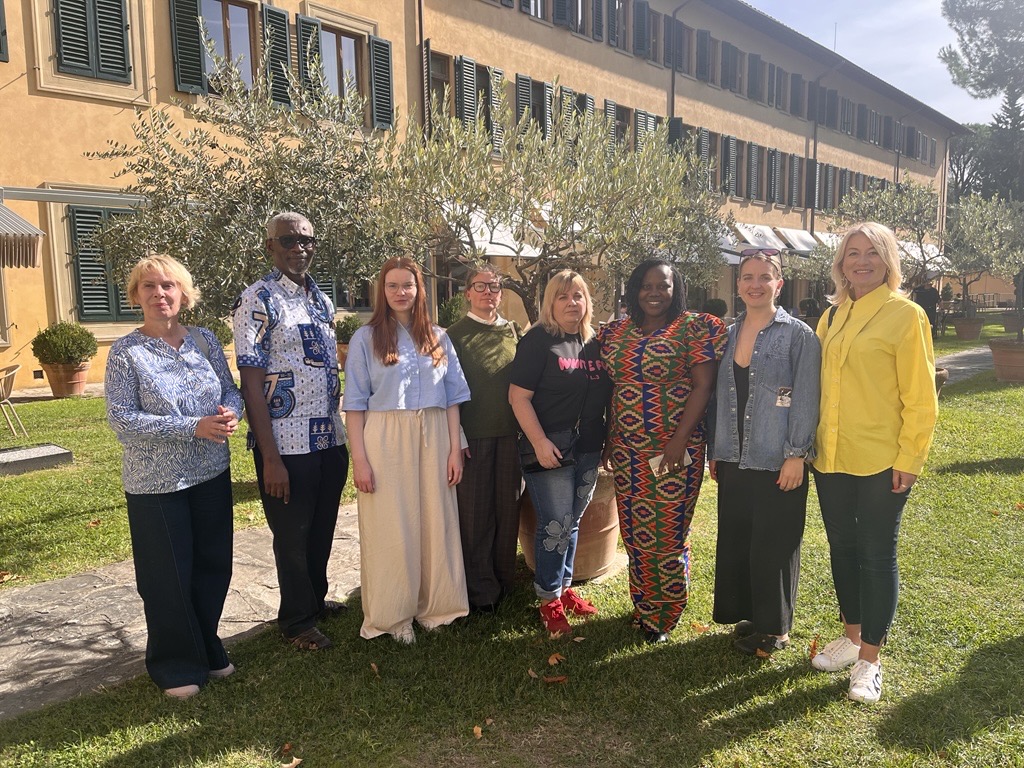
Eleven EUI librarians were actively involved in welcoming and engaging with our guests throughout the week, sharing their expertise and exchanging ideas and experiences, making the programme a truly collaborative learning experience. The programme also involved colleagues from other EUI services (external relations and the Historical Archives of the EU).
Just as important as the professional exchange were the human connections created during the week. Among the participants was Svitlana Yakubovska, Director of the Scientific Library at Kyiv National Economic University in Ukraine. In this personal account, she reflects on her journey from Kyiv to Florence, on sustaining library work during the war, and on what this week of professional exchange and human connection meant to her.