

- Exhibition title: Surrounded by Criminals (Photography exhibition) featuring works by Nicolas Wieërs and b/w David Vannucci.
- Associated event: Brotherhoods, Codes, and Ink: Comparing Mafia Worlds, Unveiling the Vory v Zakone
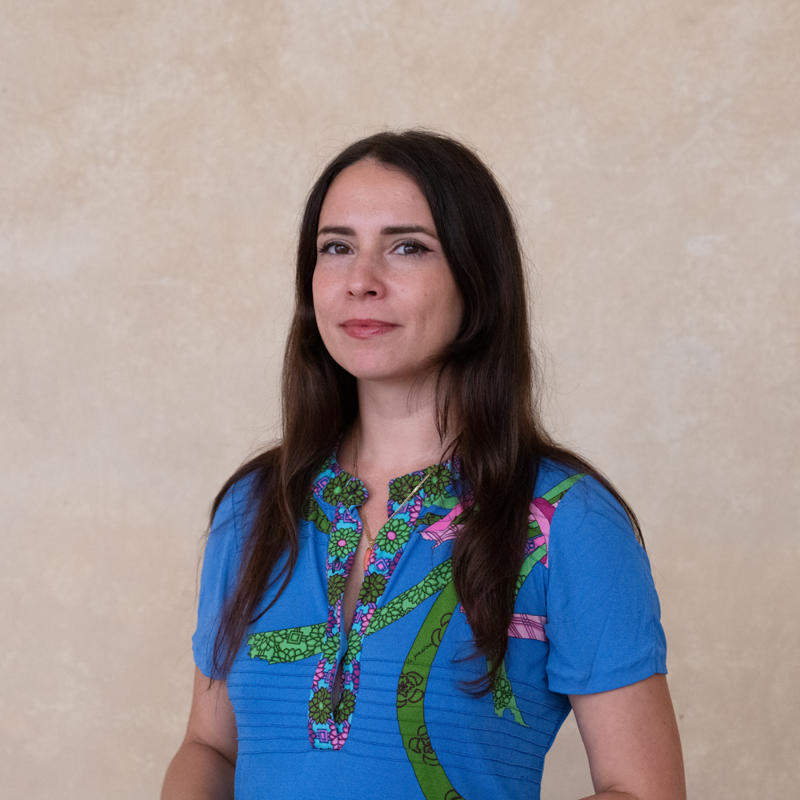
- About the researchers: Katerina Borrelli, Jacob Grech
- Exhibition dates: 10 June to 30 June 2026
- Location: EUI Library, Stockholm room, first floor, ground floor and top floor
Overview
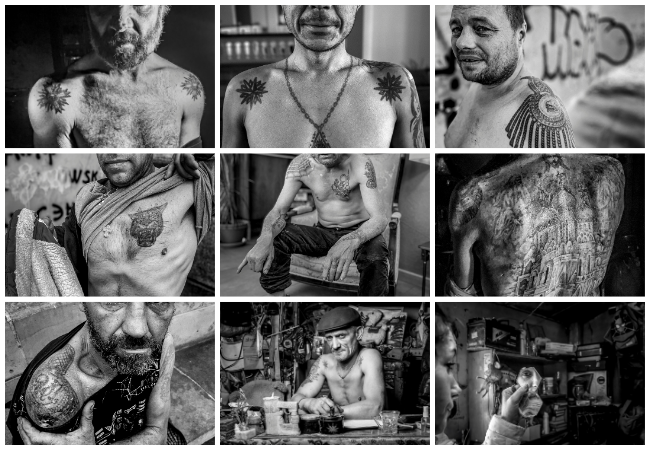
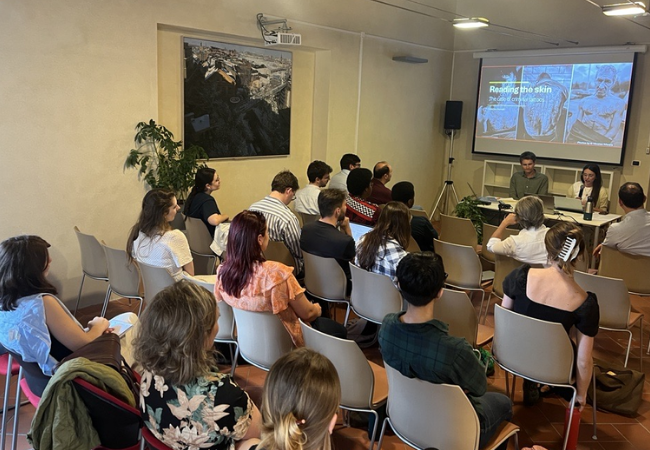
Surrounded by Criminals presents a rare visual exploration of the world of the Vory v Zakone ("Thieves in Law"), a criminal fraternity rooted in the Soviet and post-Soviet space. Through the photographs of Nicolas Wieërs, the exhibition offers an intimate encounter with former members of this secretive brotherhood, whose tattooed bodies reflect group beliefs and values alongside histories of imprisonment and crime. The exhibition was accompanied by the academic talk Brotherhoods, Codes, and Ink: Comparing Mafia Worlds, Unveiling the Vory v Zakone, which featured the lecture 'The vory-v-zakone: challenges and responses over a century' by leading criminologist Federico Varese and the presentation "Reading the Skin" by EUI researcher Katerina Borrelli. Varese's lecture traced the history of the Vory v Zakone and examined the defining characteristics that have contributed to the group's resilience over more than a century. Building on this discussion, "Reading the Skin" explored the criminological and semiotic significance of Vory tattoo practices. Complementing the academic discussion, the exhibition provided a visual perspective on these lives, typically hidden from public view. By focusing on former members of the Vory, it also raised broader questions about stigma, punishment, identity, and reintegration into society.
Exhibition concept
The exhibition explores the intersection of criminal identity, memory and marginalisation. Once a highly codified communication system, criminal tattoos conveyed biography, belonging and values within the fraternity. The exhibition examines how these symbols echo a past marked by crime, severe punishment, and long-term imprisonment, while shaping trajectories of marginalisation and low-level criminality once individuals have exited the world of the Vory. This way, the photographs invite viewers to consider tattoos not only as markers of criminality, but also as archives of a collective past and the reflection of a marginalised present.
Research context
This exhibition connects directly with EUI Law Department researcher Katerina Borrelli’s PhD project, ‘Visual Codes of the Underworld’, which investigates the legal pluralism of the Vory and other mafias through the semiotic study of criminal tattoos. The visual material is brought together with scholarship on mafia groups that spans criminology, sociology and aesthetics. Centring Vory tattoos, the photographs draw particular attention to how individuals navigate life after leaving criminal organisations, negotiating their personal histories while facing social ostracism.
Browse and borrow from a curated selection of books from the EUI Collection for this event.
Development
The exhibition was presented in conjunction with the event ‘Brotherhoods, Codes, and Ink: Comparing Mafia Worlds, Unveiling the Vory v Zakone’. The photographic materials were selected from Nicolas Wieërs' long-term documentary project developed during four years of fieldwork and relationship-building in Moldova. The exhibition was curated to create a dialogue between visual documentation and academic analysis, combining artistic representation with research perspectives on criminal organisations and tattoo culture. This project was developed through collaboration between Nicolas Wieërs, EUI researchers, and the EUI Library.
Inspiration for the exhibition
The exhibition emerged from a shared interest in understanding criminal worlds beyond mediatised and state-driven portrayals that frequently tend towards caricature and homogenisation. Nicolas Wieërs' long-term engagement with former Vory v Zakone members provided a unique opportunity to explore how identity, memory, and social exclusion are embodied and communicated through tattooed bodies. The relationship between criminality and society is a research theme that resonates across the EUI’s four departments, and the hope is that this exhibition will spark further interdisciplinary conversations and events in the near future.
Key message
Behind the tattoos are complex human lives and histories. The exhibition encourages visitors to reflect on how identity, memory, and power become inscribed on the body.
Acknowledgements
Special thanks to Nicolas Wieërs for generously sharing his work and experiences, to Federico Varese for contributing his expertise on organised crime, and to the EUI Library for hosting the exhibition and facilitating dialogue between research and visual culture. We are grateful for the crucial support of the EUI Library Director, Pep Torn, and the librarians involved in realising this project.