
Author:

This exhibition is organised by the Library Open Science Office for International Open Access Week 2025, and marks the 15th EUI edition of a global event first held in 2007.
This is the extended online version of the “Voices of Change” exhibition. It contains 9 external Open Access “Voices of Change”, 4 EUI PhD Theses authors and 4 EUI Open Access “Voices of Change”.
Knowledge is power. Who creates it, who controls it, and who can access it are questions that shape not only research but also society. The International Open Access Week 2025 theme “Who owns our knowledge?” discusses, among other issues, the integration of AI into academic processes, which threatens to undermine our knowledge systems. Discover more about the International Open Access Week 2025 event!
Open Access enables free, immediate online access to scholarly outputs and permits reuse under open licences, helping to democratise science and education. Showcasing activists who dared to challenge traditional publishing, the exhibition ‘Voices of Change’ seeks to highlight that research should not be a privilege, but a shared resource for everyone.
By highlighting these Voices of Change, we underline that Open Access is not only a library initiative but a shared academic responsibility. A movement that everyone across academia should actively embrace and advance, just as at its inception.
Amplifying the voices of those who challenge barriers, we celebrate a global movement that redefines knowledge as a common good. The future of research depends on the choices we make today. Together, we can build a culture where openness strengthens discovery, inclusion, and justice.
This exhibition invites you to reflect on these transformations. Through narratives of resistance, innovation, and commitment to open research, it celebrates people who show how opening knowledge accelerates progress and broadens participation.
As you engage with these narratives, we invite you to ask yourself:
[object Object]
External Open Access “Voices of Change”
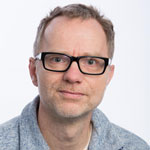
“Open science values need to be upheld by the community, especially now.”
Jeroen Bosman combines his expertise in geoscience with his role as librarian and scholarly communications specialist at Utrecht University Library. Over the years, he has become one of the most visible advocates for Open Science and Open Access, helping to shape how research is shared, evaluated, and discovered in the digital era.
He is widely recognised as co-leader of the 101 Innovations in Scholarly Communication project, an international initiative that mapped and visualised how research practices are evolving across the scholarly workflow. This project has become a landmark reference point in understanding the rapid transformation of scholarly communication in the Open Science age.
At Utrecht University, Bosman plays a leading role in the institution’s Open Science program. He coordinates Utrecht’s participation in DIAMAS, a European project dedicated to strengthening Diamond Open Access publishing, journals and platforms that are completely free for both authors and readers. His influence also extends nationally, as he contributes to shaping Dutch Open Access policy as a member of the project team revising the country’s Open Access monitoring framework.
Bosman’s expertise spans Open Access policy and practices, scholarly search engines, scientometrics, research evaluation, researcher profiling, and reference management tools. Beyond his research and policy work, he is deeply engaged in community outreach: regularly leading workshops on online search strategies and scholarly communication for students, faculty, and professionals.
Through his teaching, research, and community involvement, Bosman consistently promotes alternatives to narrow, metrics-based research assessment and champions more inclusive, transparent, and sustainable models of knowledge sharing.
Quote reference (verified):Bosman, J., & Sondervan, J. (2025, May 13). The resilience of open science in times of crisis [Online post]. Upstream. Under CC-BY License.

“Doing Open Access unlocks a whole global discourse of academic communication.”
Professor at Birkbeck and co-founder of the Open Library of Humanities, Martin is a leading advocate for Open Access in scholarly publishing. As Plan S Ambassador, he has shaped international policy and practice, bridging scholarship, technology, and equitable access to knowledge. He has authored ten books, developed digital projects, and received numerous awards.
From 2021, Plan S requires that all scientific publications that result from research funded by public grants must be published in Open Access. Plan S was launched in September 2018 by cOAlition S, an international consortium of research funding and performing organisations.
Martin has advised the UK House of Commons for the Open Access inquiry, written for the British Academy Policy series on the topic, and held key roles across major initiatives including Open Access Publishing in European Networks (OAPEN-UK), the Open Knowledge Foundations’ Open Access Steering Group, and also ran Work Package 3 of the Community-led Open Publication Infrastructures for Monographs (COPIM project), continuously developing their work to build a fairer, more open possibilities for scholarly books.
His leadership in shaping national and international policy has earned Martin widespread recognition. He was a finalist for the Guardian’s Higher Education’s Most Inspiring Leader (2017), received KU Leuven’s Medal of Honour (2018), the Philip Leverhulme Prize for Literary Studies (2019), and was named by the Shaw Trust among the UK’s 100 most influential disabled people (2021). He went on to win the Canadian Social Knowledge Institute’s Open Scholarship Award (2022), the Association of University Presses StandUP Award (2024), and the SHARP Book History Prize for Theses on the Metaphors of Digital-Textual History (2025).
Quote reference (verified):Priego, E. (2025). “If you want to make the world better, you’ve got to be prepared to put the groundwork in”: An Interview with Martin Eve on Social Justice and Design Justice in Open Access. Everything Is Connected. Under CC BY-SA license

“Validated knowledge is produced through the workings of a ‘Great and Open Conversation’.”
Jean-Claude Guédon is widely regarded as one of the founding figures of the global Open Access movement. He began his academic career in 1970 at Glendon College in Toronto and later became Honorary Professor at the University of Montreal, where his work has left a lasting impact on the way scholarly communication is understood and practiced. In 1991, he founded Surfaces, the first Canadian electronic scholarly journal, establishing himself early on as a true pioneer in digital publishing.
As one of the original signatories of the Budapest Open Access Initiative, Guédon helped define the principles that continue to guide Open Access today. His expertise has been sought by the United Nations, the European Commission, Redalyc, SciELO, and numerous governmental bodies in France and Canada. For the 15th anniversary of BOAI, he authored the landmark essay “Open Access: Toward the Internet of the Mind”, reflecting on the transformative role of open scholarship.
Guédon has also played an active role in advancing open infrastructures. He serves on the advisory board of Redalyc, is a Steering Group member of Open Humanities Press, and sits on the Academic Steering and Advocacy Committee of the Open Library of Humanities. His achievements have been recognized with numerous awards, including the Prix International Charles Hélou de la francophonie (1996), the Excellence Prize of the Canadian Society for Digital Humanities (2005), and an invitation as “Leiter Lecturer” at the U.S. National Library of Medicine (1998).
In 2018, the Jean-Claude Guédon Prize was established to honour outstanding contributions to scholarly publishing and Open Access.
Quote reference (verified):Guédon, J.-C. (2022). Shaping Open Science: What objectives? Which actors? What roles? Open science, a landscape under construction with a horizon of possibilities. Under CC-BY License

“The framing of access to knowledge as a permeating human right is foundational (…).”
Heather Joseph is one of the most influential advocates for open access and reform in academic publishing. Since 2005, she has served as Executive Director of the Scholarly Publishing and Academic Resources Coalition (SPARC), where she has steered the organisation into becoming the leading global voice for open and equitable research and education systems.
Under her leadership, SPARC has played a pivotal role in advancing public policy toward openness. Joseph was instrumental in the U.S. government’s landmark decisions to require open access to federally funded research, including the 2023 White House Memorandum mandating that all publicly funded research outputs be made openly available. She also co-founded Access2Research, championing grassroots advocacy for transparency and access.
She has advised funders and institutions worldwide, serving on committees for the U.S. Department of Commerce Data Advisory Council, the National Institute of Standards Research Data Framework, and the U.S. National Academies of Science, Engineering, and Medicine’s Roundtable on Aligning Incentives to Support Open Science. Internationally, she has worked with the United Nations, the World Bank, and community-led initiatives across Europe, Asia, and Africa, advocating for equity-centred approaches to knowledge sharing.
Heather Joseph’s contributions have been widely recognised: in 2021, she received the prestigious Miles Conrad Award for her leadership in open access. Today, she continues to shape global discussions on open research as a member of the PLOS Board of Directors, and as a frequent speaker and writer on scholarly communications.
Quote reference (verified):Shumaker, D. (2021, April 20). Open knowledge and social justice: An interview with SPARC’s Heather Joseph. Information Today, Inc.
“A world with far more Open Data will be a better world – one that is more transparent.”
As a PhD in Library and Information Sciences and an expert in metadata and open knowledge practices from different perspectives. Eva considers herself an ‘open knowledge militant’. She has shaped the global Open Science landscape through research, teaching, and policy leadership, influencing debates on open data and digital repositories.
She has been a lecturer at Universidad Carlos III de Madrid (UC3M), LIS department since 1997. She has been an active member and led several international research projects, advisory boards and communities. These include the Dublin Core Metadata Initiative (DCMI); the OpenAire Advisory Board, a pan-European non-profit organisation that provides an infrastructure and services for Open Science, by establishing a network of repositories and operating a research information system to monitor and link academic research outputs. She’s also involved with Metadata2020, a collaboration community that advocates richer, connected, and reusable, open metadata for all research outputs, which aims to advance scholarly pursuits for the benefit of society. Finally, she is currently Deputy Vice President for Scientific Policy-Open Science at UC3M and a member of the European Open Science Policy Platform (EU-OSPP) on behalf of Young European Research Universities Network (YERUN). She is the Open Science Policy Platform (OSPP) chair for the 2nd mandate.
In 2005/06, she was awarded a Fulbright Research Scholarship at the University of North Carolina at Chapel Hill. In 2015, she won the Young Researcher of Excellence award of UC3M. In 2017, she was named “Open Data Champion” by SPARC Europe.
Quote reference (verified):Rueda, L. (2017). An interview with Prof. Eva M. Méndez Rodríguez on 7 September 2017. European Open Data Champions. Under CC-BY License.
“I really have an immense respect for libraries and librarians, and I love working with them.”
Frances Pinter, at the age of 23, became the first woman in the UK to establish her own publishing house, Pinter Publishers, which quickly gained recognition as a leader in the social sciences. She went on to launch Belhaven Press, one of the first environmental studies imprints, and later acquired Leicester University Press, cementing her reputation as an innovative force in academic publishing.
Her career spans both commercial and non-profit sectors. In the 1990s, philanthropist George Soros invited her to design large-scale publishing and education programs across Central and Eastern Europe and the former Soviet Union. She has also led international projects on licensing, intellectual property reform, and the adoption of Creative Commons in developing countries.
Pinter has held leadership roles at Bloomsbury Academic, where she launched the digital Winston Churchill Archive, and at Manchester University Press. She has also served as a Visiting Fellow at the London School of Economics, contributing to research on intellectual property and global civil society.
Her most significant impact lies in advancing Open Access. In 2012, she founded Knowledge Unlatched, a global library consortium that has made thousands of academic books freely available. Returning to the Central European University Press, she introduced the Opening the Future initiative, a sustainable model for Open Access book publishing.
More recently, she has campaigned for open climate science and launched Supporting Ukrainian Publishing Resilience and Recovery (SUPRR) to help sustain scholarly publishing in Ukraine.
Her contributions have been recognised internationally, including an Honorary Doctorate of Letters from Curtin University in 2015.
Quote reference (verified):Attwell, A. (Host). (2024, June 7). Innovation and impact in open-access publishing [Audio podcast episode]. In How Books Are Made. Electric Book Works.
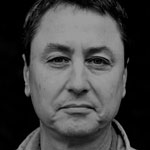
“There are lamentably many problems for which OA is part of the solution.”
Senior Advisor on Open Access at Harvard Library and Director of the Harvard Open Access Project at the Berkman Klein Centre, Peter has dedicated decades to advancing the free circulation of research. His work spans education, collaboration, writing, tool-building, and public speaking, continuously shaping global conversations on equitable access to scholarly information.
Suber’s path to becoming one of the leading figures in the Open Access movement began in philosophy. A long-time teacher and researcher, he brought a scholar’s rigor and ethical perspective to the emerging field of digital knowledge sharing. In 2001, he participated in the Budapest Open Access Initiative, the first major international OA declaration and a touchstone for the movement.
Since then, Suber has been both a practitioner and chronicler of Open Access. He launched Open Access News and the SPARC Open Access Newsletter, regarded as the most authoritative early sources on OA developments. He also co-founded, with Robin Peekthe, the Open Access Directory, creating lasting infrastructures for documenting and supporting the movement.
The Harvard Open Access Project (HOAP), created in 2011, fosters Open Access within Harvard and far beyond, conducting research and policy analysis while providing timely, reliable information about OA itself. The project also consults pro bono with institutions drafting or implementing OA policies, ensuring evidence-based approaches and global reach.
Suber is also a prolific author. His books, including Open Access and Knowledge Unbound, available online via the EUI Library catalogue and in the Library’s physical collection, remain essential reading for anyone exploring how scholarly publishing can be more transparent, equitable and effective.
Quote reference (verified):Suber, P. (2012). Open access (p. 28). The MIT Press. Under CC-BY License.
“You get to feed at this banquet of knowledge while the rest of the world is locked out.”
A computer prodigy and visionary, Aaron Swartz dedicated his life to free knowledge, onl, he created Watchdog.net, a “good government” platform designed to aggregate and visualise helped develop the Creative Commons license. Through his 2008 Guerrilla Open Access Manifesto, he denounced the tyranny of academic publishing and championed freely accessible knowledge for all.
Swartz’s activism was as wide-ranging as it was bold. In 2008 he created Watchdog.net, a “good government” platform designed to aggregate and visualize data about politicians and increase transparency. That same year he famously helped liberate millions of federal court records from the PACER system, exposing privacy violations and sparking reforms to judicial rules. He also filed Freedom of Information Act requests to hold authorities accountable.
Deeply committed to civic engagement, Swartz co-founded Demand Progress to mobilise citizens online around civil liberties, government reform, and internet freedom. He became a leading strategist on preventing the passage of the Stop Online Piracy Act (SOPA), helping to organise one of the largest online protests in history. Earlier, he had co-founded the Progressive Change Campaign Committee, experimenting with grassroots organising and digital tools to support progressive policies.
Alongside activism, Swartz also spent time in academia. As a Lab Fellow at Harvard University’s Edmond J. Safra Research Lab on Institutional Corruption, he examined how systems and incentives shape political outcomes. His technical expertise and passion for justice converged in projects such as the Open Access Tracking Project, which continues to monitor developments in the movement he helped to build.
After a prolonged legal battle over his actions with PACER and academic works, the prosecution rejected a counteroffer. After that, in 2013, Aaron Swartz was tragically found dead in his Brooklyn apartment. He was subsequently honoured in the Internet Hall of Fame, highlighting his enduring impact on open access and digital rights. Today, Swartz’s legacy endures in the open-access movement, digital-rights communities, and in every initiative that treats information as a public resource rather than a privilege.
Quote reference (verified):Swartz, A. (2008). Guerilla Open Access Manifesto.

“If you want to move human knowledge forward, you have to share your discoveries with others”
A leading voice in the global shift toward FAIR Data and Open Science, Marta is a pioneer of improved research practices through data stewardship and academic collaboration. From Cambridge to TU Delft and beyond, she has built sustainable infrastructures, led and guided international initiatives, and tirelessly championed transparent, accessible research worldwide.
In 2015, Marta joined the Office of Scholarly Communication at the University of Cambridge, where she led the Research Data Management Facility. In this role, she focused on developing infrastructures and repository solutions to support research data sharing and on promoting these practices to academics and students. At TU Delft in the Netherlands, she headed the Data Stewardship Project, successfully building and managing a team of disciplinary data stewards, individuals responsible for the management and governance of a specific subset of an organisation’s data, ensuring its accuracy, consistency, quality, and security throughout the research cycle.
Beyond her professional roles, Marta is actively engaged in national and international initiatives. She played a pivotal role in establishing the Dutch Research Council (NWO) thematic Digital Competence Centre for Natural and Engineering Sciences and served as Co-Chair of the FAIR in Practice Task Force within the European Open Science Cloud (EOSC) FAIR Working Group.
- FAIR stands for: Findable Accessible Interoperable Reusable
Quote reference (verified):Heckman, J. (2017). An interview with Dr Marta Teperek on 19 April 2017. European Open Data Champions. Under CC-BY License.
EUI Open Access “Voices of Change”
PhD Theses most downloaded in Cadmus, defended between 2014-2024

Full-text available in Open Access

Full-text available in Open Access

Full-text available in Open Access

Full-text available in Open Access
Open Access “Voices of Change” in Cadmus
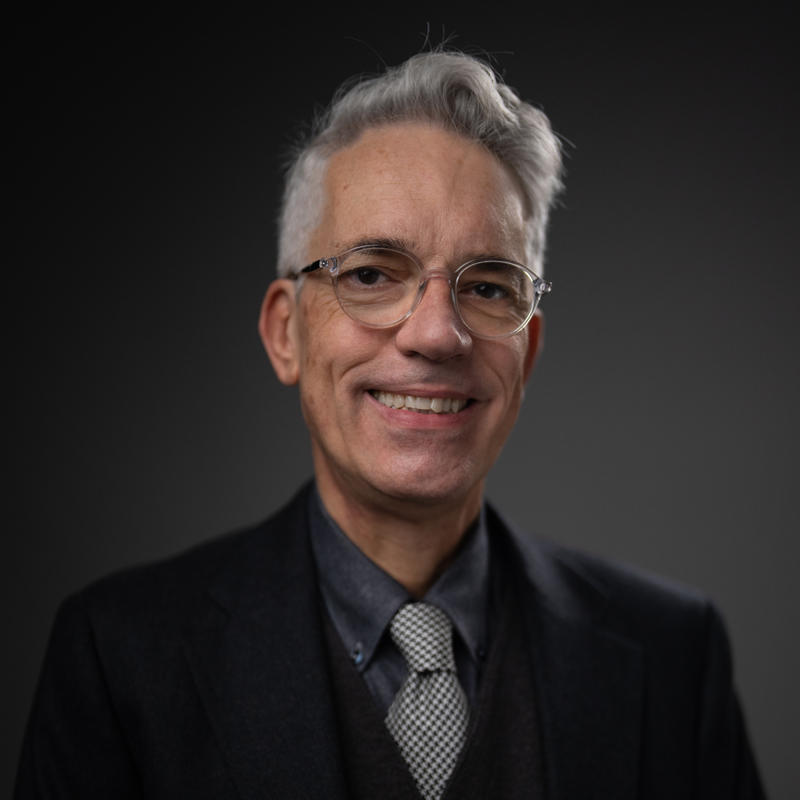
Claudio Radaelli
- Full-time Professor
claudio.radaelli@eui.eu
View the profile of Claudio Radaelli on the EUI website
Ioana-Elena Oana
- Part-time Assistant Professor
ioana.oana@alumniprofs.eui.eu
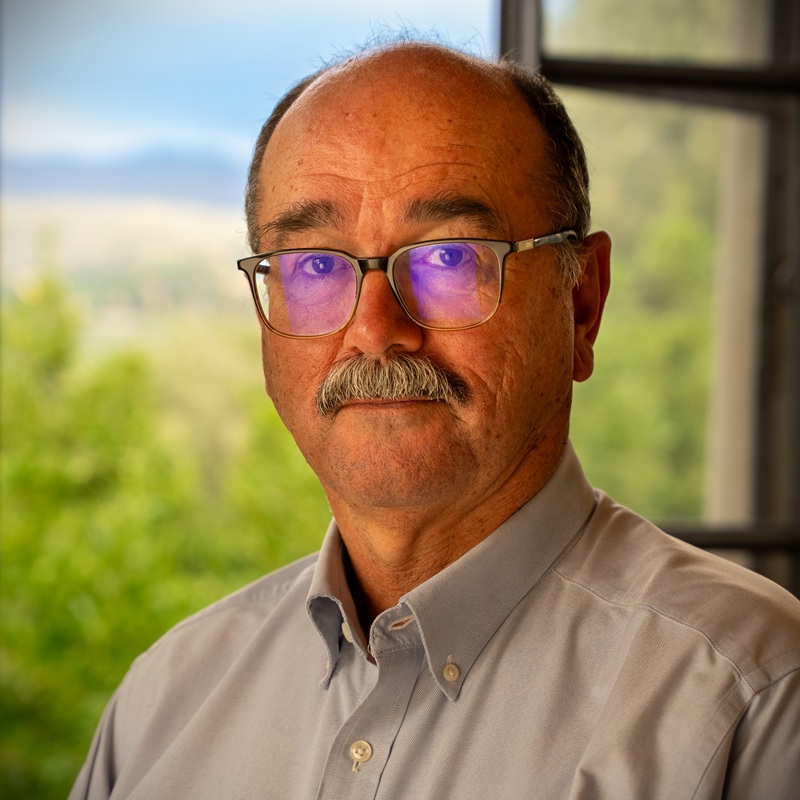
Bernard Hoekman
- Part-time Professor
bernard.hoekman@eui.eu
View the profile of Bernard Hoekman on the EUI website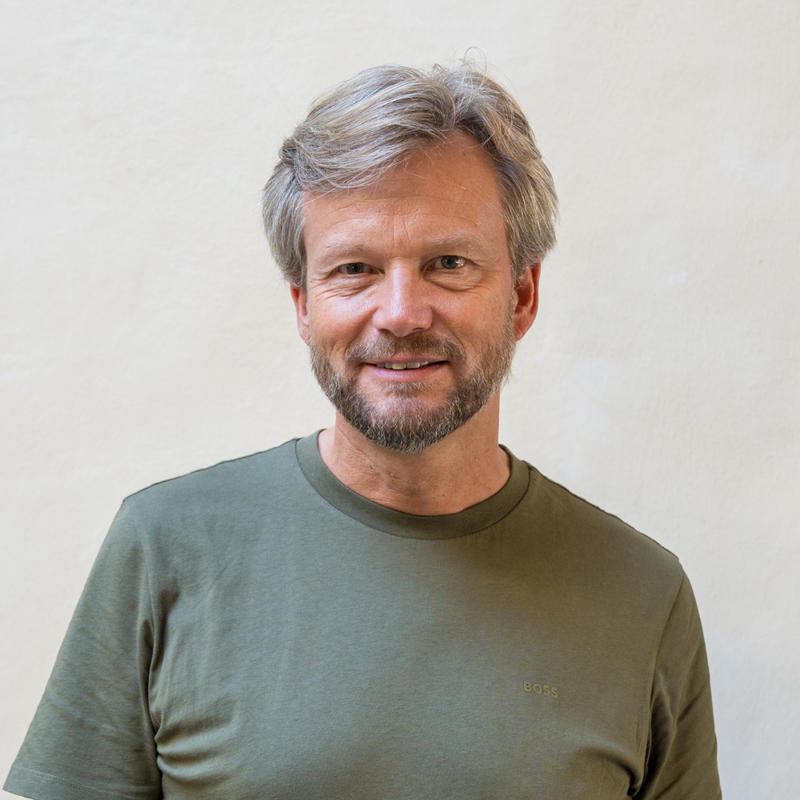
Martijn Hesselink
- Full-time Professor
martijn.hesselink@eui.eu
View the profile of Martijn Hesselink on the EUI website
The individuals portrayed have provided consent for the use of their images. All citations derive from verified sources and references are documented in this blog.
Open Access has no borders, and “Voices of Change” exist everywhere! Join us by visiting the ZeeMaps tool and add your country with a marker!
Missed the walking exhibition on the EUI Campus?
Here’s your chance to see the physical exhibition posters!
Travelling exhibition schedule:
- Villa Salviati | 29 September – 5 October
- Villa Schifanoia | 6 – 12 October
- Villa La Fonte | 13-19 October
- Badia Fiesolana | 20 – 26 October
- Palazzo Buontalenti | 27-31 October
This blogpost was written by Lotta Svantesson, Isabel Matos and Barbora Šantorová and published on 25 September 2025.