

World Storytelling Day 2026: storytelling in academic research
In an academic environment where evidence and data are central, storytelling occupies a liminal but also potentially transformative position. As the 2026 World Storytelling Day event at the EUI Library demonstrated, narrative is not just a supplement to research but can also function as a highly effective method and analytical lens across disciplines. By integrating oral traditions, visual memories, and personal testimonies into fields as varied as history, law, and cultural studies, scholars can gain access to a powerful "intersubjectivity" that illuminates human experiences and brings "light" to the often dark or complex processes of discovery and research.
Elena Asciutti: oral traditions and the reimagining of community
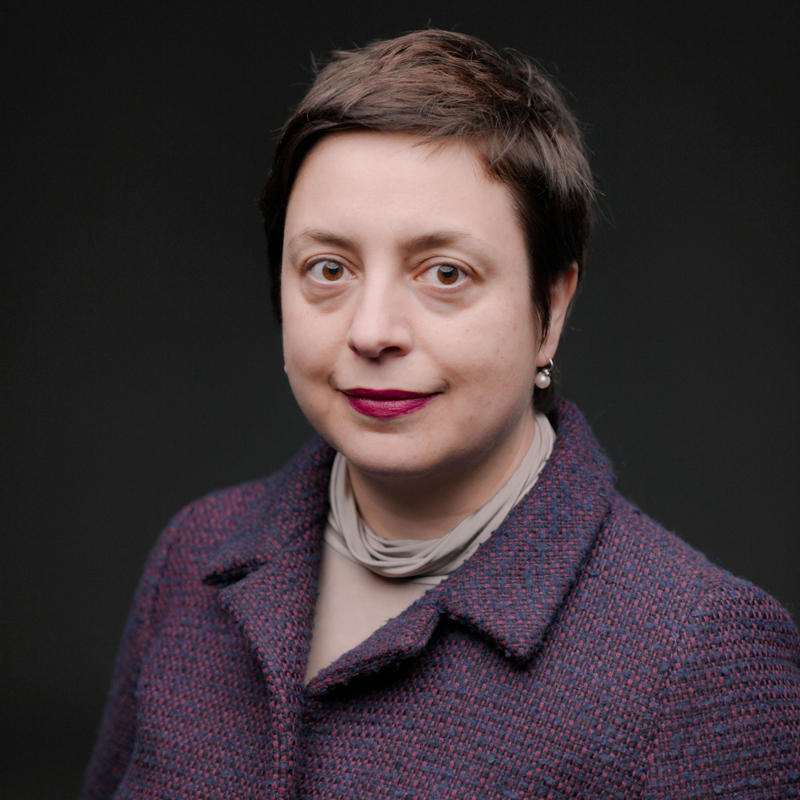
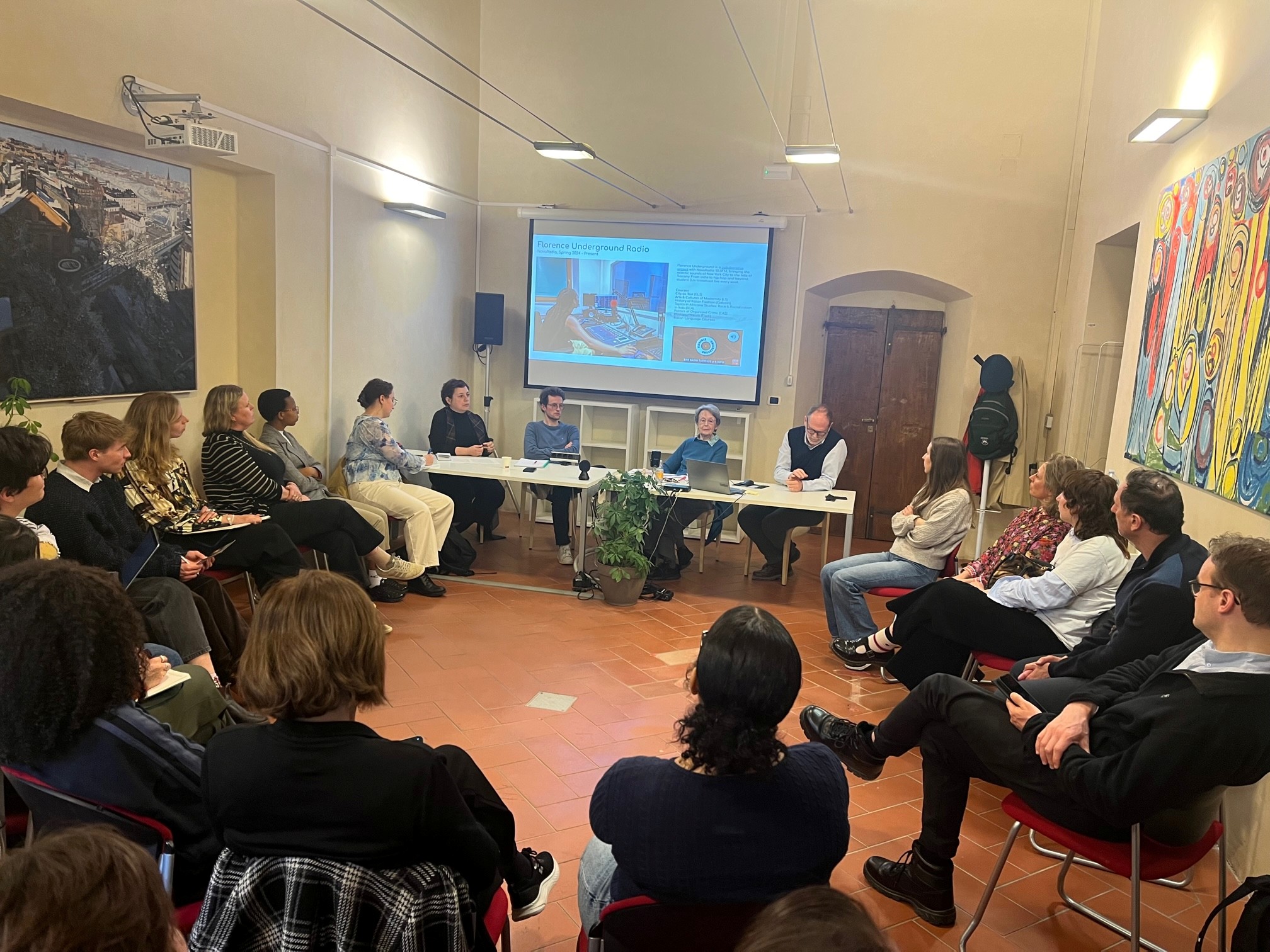
In the Stockholm room of the EUI Library, arranged in a circle of chairs for the occasion, the event was opened by Elena Asciutti, Coordinator for External Relations and the author and storyteller behind the EUI’s RadioCavolo programme Diffusione Fiaba. She highlighted that libraries are more than just repositories of books; they are "keepers of stories" where users regularly reflect upon and write new narratives. This is reflected in an African proverb: “when a storyteller dies, a library burns.” Since 2004, World Storytelling Day has celebrated oral traditions as a global art form. The 2026 theme, "Light in the dark," provided a platform to reflect on the power of stories in times of uncertainty. Asciutti’s contribution focused on the communal power of narrative to foster connection and transformation. By collecting postcards from the EUI and NYU communities on what "Light in the dark" meant to them, she identified a recurring thread of "radical optimism." Her work with Diffusione Fiaba illustrates how broadcasting folk tales and interviews with storytellers and scholars can spread the spoken word across borders, moving storytelling from an informal community exercise or a creative performance to a recognised tool for academic and cultural engagement capable of reimagining connections and envisioning future solutions.
Luisa Passerini: intersubjectivity and the memory of mobility
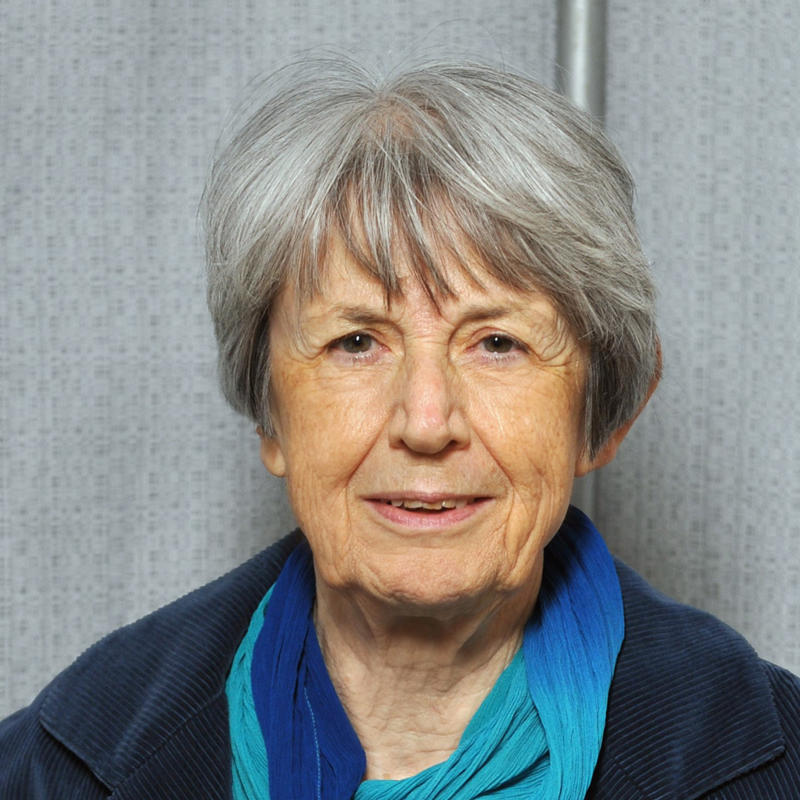
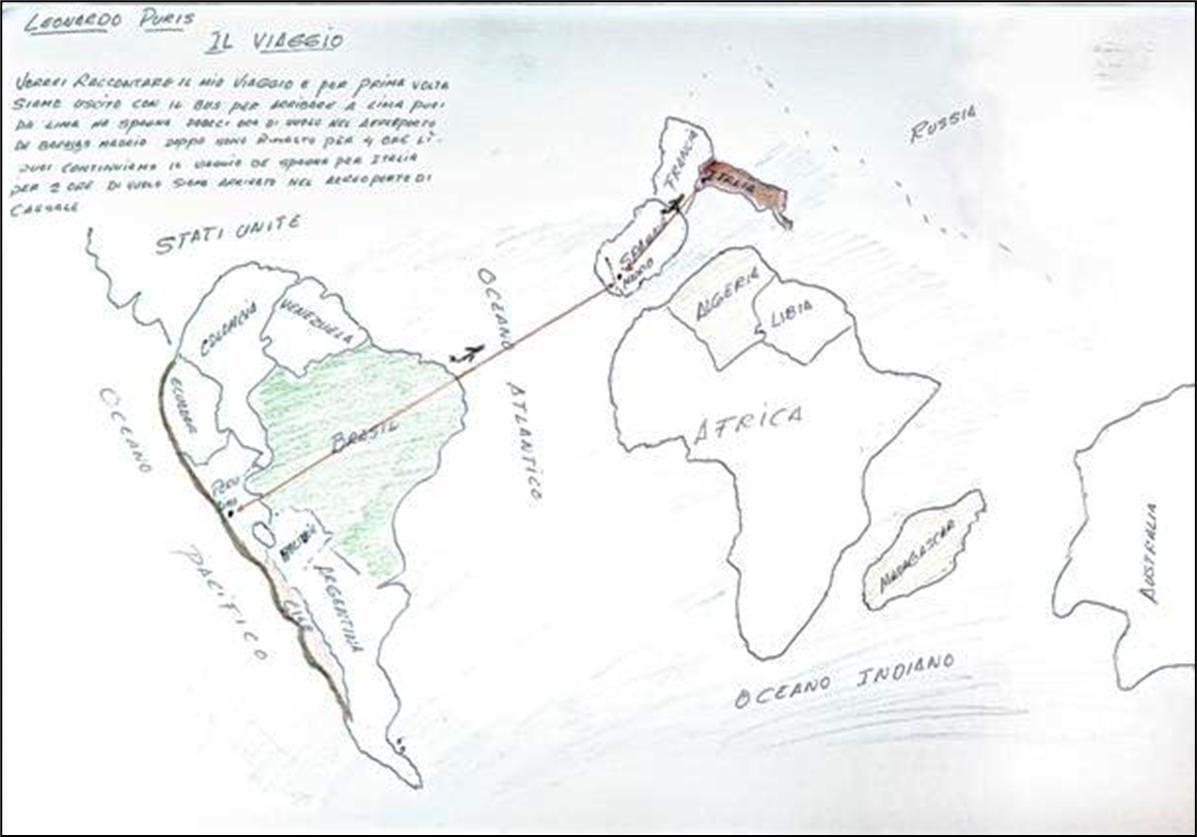
Professor Emerita Luisa Passerini, a pioneer in oral history, followed with the trenchant argument that storytelling is inherently epistemological—quite literally the way we come to know ourselves and others. Drawing on her European Research Council project, Bodies Across Borders: Oral and Visual Memory in Europe and Beyond (BABE), Passerini explored how personal testimonies of migration can challenge and expand traditional historical records. A central pillar of Passerini’s research is the concept of intersubjectivity. She posits that no individual is a subject in isolation; rather, subjectivity is formed through relationships, such as the intergenerational transmission of oral traditions seen in ''simple cultures'' or the collective identity found in factory workers’ memories of fascism. In the BABE project, Passerini used "visual storytelling"—asking migrants to draw maps of their journeys from their home countries to Italy—to reveal a "hierarchy of priorities". This is the case of Leonardo Puris, born in Peru in 1960 (and working as a labourer at the time of the interview, May 2013). His map, annexed in this article, prioritises South America and Africa, while reducing Europe to a mere bridge, highlighting how personal narratives can subvert Western geographical norms and hegemonies. This "figurative representation" serves as a bridge between the oral and the visual, proving that storytelling allows researchers to access layers of memory that traditional data often obscures.
Antoine De Spiegeleir: narrative justice at the International Court of Justice
Antoine De Spiegeleir, a PhD graduate at the EUI Law Department, brought a critical perspective to how institutions like the International Court of Justice (ICJ) become storytellers. While legal proceedings are often viewed as dry, formalistic, and technical, Antoine argued that storytelling can be a vital mode of expression even in state-against-state disputes. Focusing on the Chagos Archipelago case, Antoine analysed the rare inclusion of a video testimony of a native inhabitant forcibly removed from her home. He described this as a moment of "light in the darkness of procedure," where the raw emotion of a victim’s experience was used to humanise a familiar legal formula. However, he also warned of the exploitative nature of storytelling in law. The strategic use of "statement of impact" videos can be a form of "silencing through platforming". For De Spiegeleir, narrative justice requires more than just giving victims a microphone; it requires the legal field to develop a vocabulary for the ambiguity and nuances of human experience, which it has traditionally been trained to "unlearn."
Scott Palmer: pedagogy as co-creation
Scott Palmer, a literary historian and Senior Coordinator for Digital Learning and Innovation at NYU Florence, discussed storytelling as a "critical practice" in teaching and learning. Inspired by author Henry Miller’s belief that the best way to appreciate art is to practice it, Scott integrates creative production directly into his curriculum. He argued that storytelling originates within a "shared discourse community" where knowledge is not just transmitted from teacher to student but collaboratively co-produced. Palmer showcased several student-led projects, including Florence Underground Radio and the digital initiative A Stranger in the Villa created by students during the Spring 2025 semester. In the latter, students created audio stories inspired by objects in the Villa La Pietra collection, which allowed for "reckoning with a colonial history" and to reflect upon and analyse the principles and potential effects of decolonisation in museum environments. By choosing objects and imagining their "tales of encounters," students moved beyond passive learning into an "alternative embodied form of knowledge production." In the age of AI, Palmer suggests that this focus on narrative constructions—in particular the intentionality and decision-making processes that underpin storytelling—is more essential than ever for understanding and amplifying the social and public dimensions of academic work.
Overall, each panellist demonstrated the way in which storytelling emerges as a collective process of transmitting knowledge; one that connects generations, preserves cultural memory, and opens space for imagining shared futures. When integrated into academic environments, it can create additional pathways for emerging scholars and can contribute significantly to the reimagining of universities as more human-centred spaces of knowledge creation, exchange, and collective innovation. Elena Asciutti closed the event with a vivid retelling of an oral story from the Swahili tradition titled "The Tongue Meat," (The Old Wives’ Fairy Tale Book, ed. Angela Carter, Pantheon Books, 1990): a reflection on how stories, poems, and songs serve as a form of intellectual and spiritual sustenance that illustrate why storytelling remains a vital source of "light" and human connection in the twenty-first century.
To learn more, explore the EUI Library resources selected by the panel members for the World Storytelling Day event, Light in the Dark.