Inside Bosnia And Herzegovina's Citizens' Assembly On Reconciliation
Author:

The views and opinions expressed in this article are those of the author and do not necessarily reflect the position of the STG Transnational Democracy Programme.
Bosnia and Herzegovina is increasingly experimenting with deliberative democracy. The latest citizens’ assembly was a nationwide attempt to identify pathways to long-term reconciliation.
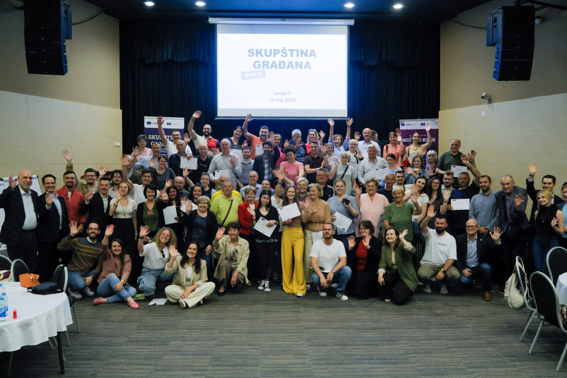
The Citizens’ Assembly of Bosnia and Herzegovina was convened by the Joint Committee on European Integration of the Parliamentary Assembly of B&H. It was organised as part of the project “Empowering Trust and Cohesion in Communities in Bosnia and Herzegovina (Možemo Bolje)” jointly implemented by the European Union in Bosnia and Herzegovina, the United Nations in Bosnia and Herzegovina, the OSCE Mission to Bosnia and Herzegovina, and the Council of Europe Office in Sarajevo.
Bosnia and Herzegovina has been dealing with post-conflict tensions ever since the war after the dissolution of Yugoslavia. As a multiethnic country, Bosnia and Herzegovina is home to three constitutive peoples and has a very complex political structure and decision-making system. Although designed to ensure equality and representativeness, the system appears to hold the citizens of B&H hostage to ethnic divisions. The topic of the assembly is thus particularly important for social cohesion and the country’s progress.
I attended the Assembly in the role of an official observer. My reflections draw on that perspective, as well as on my experience with citizens' assemblies and my own background in Bosnia and Herzegovina.
Who participated in the Assembly?
The selection of participants was done by Ipsos, a global market and opinion research agency, in accordance with the principles of sortition. Invitation letters were sent to 5000 addresses across the country based on a two-stage stratified sample, by region (9 regions as 9 electoral units for the election for the Parliamentary Assembly of B&H) and population density. Among the 385 citizens who expressed their interest, the representative sample, based on gender, age, residency, education, and ethnicity, was drawn using the Panelot platform for randomly selecting representative citizens’ panels. The selection was livestreamed and transparent, which significantly contributed to the legitimacy of the process. The 70 selected Assembly members reflected the demographic diversity of Bosnia and Herzegovina.
When and where did the Assembly take place?
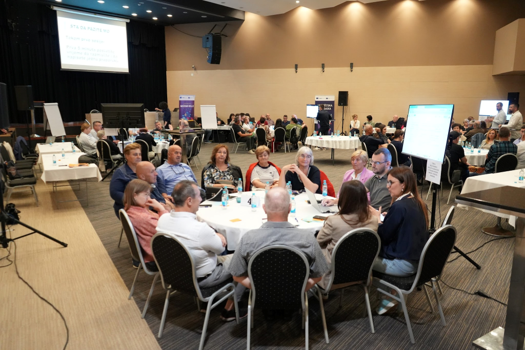
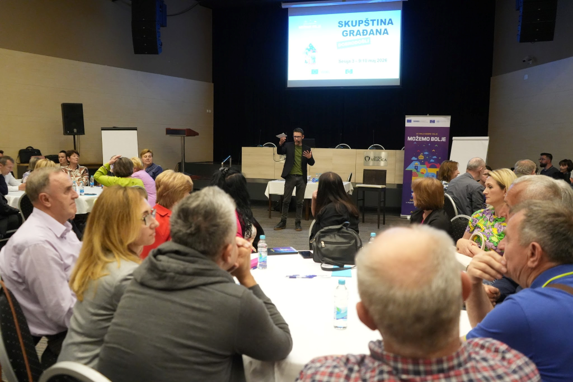
The Assembly took place over three weekends in March, April and May at three different locations. The first session was hosted in Sarajevo, the country’s capital, the second one was organised in Neum, a beautiful seaside town, and the third one in Banja Vrućica, a health and wellness resort nestled in the mountain foothills. The locations were carefully chosen to fulfil the requirement of geographic distribution, which enabled the Assembly to visit regions where each of the country's three constituent ethnic groups predominantly resides. The settings, especially those in Neum and Banja Vrućica, also provided a calm and relaxing atmosphere conducive to cooperation and active engagement.
How was the process structured?
The first weekend was dedicated to Assembly members getting to know one another, introducing them to deliberation and citizens’ assemblies, engaging in difficult conversations about post-war traumas and the culture of memory, as well as expert consultations. To identify steps towards reconciliation, citizens focused on three thematic areas: the political, economic, and institutional conditions needed to support reconciliation; remembering the past; and the role of the media in both fostering connections and deepening divisions. During the second weekend, citizens worked on the first and second thematic area, while the third weekend was booked for tackling the third one, consulting with experts once again, finalising recommendations and voting. The Assembly members formed 41 recommendations and all of them were adopted with a two-thirds majority, 7 of them unanimously.
How did the Assembly members deal with the emotional aspect of the topic?
Due to a sensitive and emotionally difficult topic, a psychotherapist was present at all times and available for support. As an observer I wasn’t part of these conversations, but I was informed by the psychotherapist that many members reached out, as some of the discussions evoked their war traumas. The majority of these consultations took place during the first Assembly session, when these topics were first raised and before the members had the chance to develop mutual trust. Very few people used this opportunity during the second Assembly meeting, partly because the schedule was packed and there wasn’t enough time. However, some of them still exchanged a few words with the psychotherapist in passing and the mere fact that the person was present the whole time seemed to have added a sense of reassurance and calmness to the members.
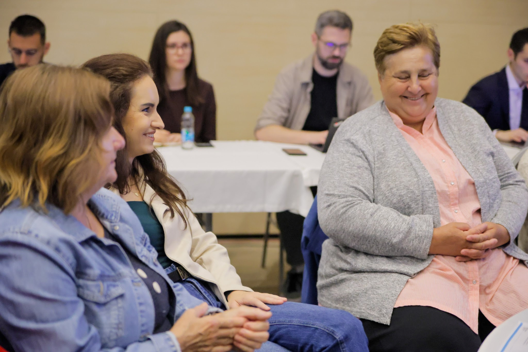
Another interesting aspect was the way citizens managed the complexity of the topic and the challenging task before them with humour and mutual friendliness. At times, discussions in the small groups became intense and heated, reflecting how seriously participants took their role. Yet, on many occasions when tensions increased, someone would make a joke, prompting laughter across the group and relaxing the atmosphere. This allowed the discussion to continue in a constructive way despite disagreements.
Which design aspects particularly influenced the process?
At the very beginning, before the deliberations began, Assembly members had a very productive conversation about values. They were asked how they would define values, followed by a discussion in subgroups about which values should lead them in coming up with recommendations and proposed action points. Groups later merged to collectively choose their guiding values. Those were fairness, trust, solidarity, empathy, humanity, respect (for diversity), tolerance, creativity, freedom, responsibility. Activities like this one are particularly important for deliberation in post-conflict and divided societies, where members need to come up with joint recommendations despite differences. The fact that the members were not simply given these instructions, but were instead supposed to decide on the values together increases their significance, adds a very symbolic element and contributes to the sense of ownership of the process.
Deliberative processes are still new in Bosnia and Herzegovina and most citizens are not familiar with how citizens’ assemblies work. This Assembly took that fact into account very well and it was fully adapted to people who are experiencing something like this for the first time. During the second weekend, before the group work began, the lead facilitator explained what deliberation means and what it’s supposed to look like. He underlined aspects like active listening, clear argumentation, consensus, giving everyone a chance to express themselves, as well as the fact that it is completely normal to change your opinion throughout the process. This was followed by an exercise of deliberation and drafting recommendations to a simpler topic of regulating electric scooters in traffic. The facilitators, who were all professionally trained for deliberative processes, helped Assembly members by offering explanations and guidance on how the recommendations should be formed. This activity was very helpful, as it is crucial for citizens to fully understand the process and know what the expectations are. If there was any confusion before, this exercise surely helped everyone get on the same page.
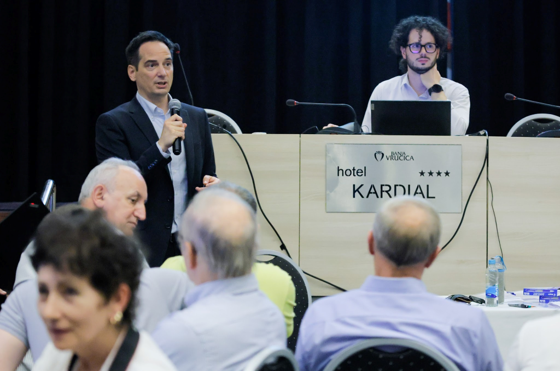
Two fact-checkers were present during all the Assembly sessions, a staff member of the UN Mission in B&H and an independent legal expert. Their role was to answer various questions regarding current legislation and to find official information. The members used this opportunity many times during their deliberations when they needed to verify different information, find out if certain policies exist and how they are formulated. This helped them immensely in identifying what additional policies can be recommended and how the current ones can be enhanced or implemented in a more efficient way. Fact-checking and answering questions of this nature is usually the responsibility of experts invited to share their input, however, they are present only during their designated time slots and not throughout the whole process. Alternatively, facilitators are sometimes available to fulfil this role, but they do not necessarily have the required expertise and have other responsibilities on their shoulders. This design segment made the whole process comprehensive and well-organised, and the recommendations truly relevant and reflective of the current policies.
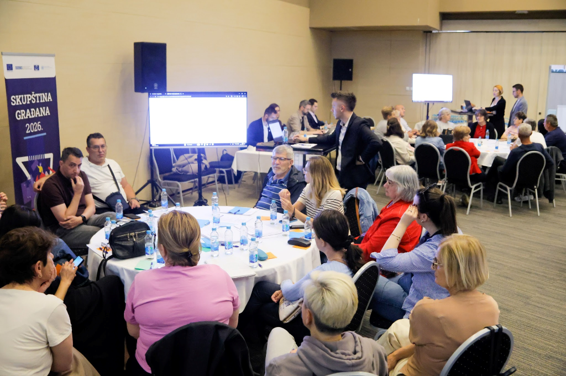
The organisers also paid special attention to bonding Assembly members and fostering group cohesion, which was especially beneficial given the sensitive topic. A good example is an exercise at the beginning of the second Assembly session. Members were asked to find someone they had not met last time and speak to them. They were given a few different conversation topics, some more lighthearted and others quite serious and connected to the topic. Although the time was very limited, this was an excellent icebreaker and a way for people to connect with one another more easily, which significantly contributes to their collaboration. Because of the standard rules for observers, I wasn’t able to hear these, or any other group discussions, but most members seemed very immersed in their interactions, speaking loudly, gesticulating, laughing. During the time intended for discussing the question on their perception of reconciliation, many members, based on their body language and facial expressions, seemed to have been speaking about more casual topics. The fact that they did not necessarily use the given questions could be because they had no difficulty making conversation or forming connections on their own, or because they were avoiding topics that could potentially lead to disagreements and sticking with less controversial ones.
How were the deliberations designed?
The professionalism and expertise of the Assembly’s design team played a crucial role in fostering productive deliberation. The team was led by Damir Kapidžić, Professor of Political Science at the University of Sarajevo, who is an internationally renowned expert in deliberative processes.
The agenda was designed by Ivan Jovanov, a skilled facilitator from North Macedonia. The deliberations consisted of group work in the World Café format and plenary discussions. During the second Assembly session, the way in which this format was implemented seemed somewhat chaotic and caused a bit of confusion, especially in the plenary sessions, when members were going through all the recommendations and reviewing the edits. However, the model was already adapted ahead of the third Assembly session. Modifications were clarified to the citizens and it was evident that they made the deliberations more smooth and productive. Adjusting the design during the process itself, rather than drawing out lessons only after its completion, shows the focus and dedication of the design team and the facilitators, as well as the readiness to respond quickly and efficiently to improve the quality of the deliberation.
What did the citizens recommend?
The recommendations Assembly members jointly came up with are based on the thematic areas they worked on. Each recommendation contains the general idea, the suggested course of action and the name of the institution in charge, which makes them very clear and easy to review.
Some of the steps towards reconciliation identified in the educational sector are: ensuring continuous education on peace pedagogy for all education professionals at all levels of education in Bosnia and Herzegovina; strengthening and encouraging inter-entity/cantonal cooperation through student, teacher, and academic exchanges and other projects; educating teaching staff on approaches to raising new generations in order to prevent the transmission of transgenerational trauma; prohibiting political activities within educational institutions through all education-related legislation at all levels; developing applications (interactive platforms) with educational content promoting equality, connection, and unity, to be promoted and used in schools.
When it comes to the dealing with the past, the citizens recommended the following: establishing an institutional system of free psychosocial support and counselling for individuals affected by war trauma; improving the legal framework and implementation of existing laws regulating the protection of the rights of civilian war victims/victims of war torture; strengthening the implementation of the existing legal framework addressing incitement to national, racial, and religious hatred, division, and intolerance, including banning the glorification of convicted war criminals.
In the area of media, some of the envisioned measures are: ensuring greater financial and programmatic independence of all public broadcasters in B&H; implementing mandatory media literacy promotion campaigns across all public broadcasters in B&H; more effectively regulate unethical reporting, misinformation, and content aimed at undermining coexistence and inciting intolerance in print, online (portals and social media), and electronic (RTV) media; adopting legislation integrating principles from the EU “Anti-SLAPP” Directive at
all levels of government in Bosnia and Herzegovina and strengthen other forms of protection for journalists and human rights defenders, ensuring greater freedom and safety; providing systemic support to independent fact-checking platforms.
The Assembly members also envisioned a set of more general recommendations, not directly related to reconciliation. As they represent crucial steps for a positive development of the country, these recommendations in themselves contribute to social cohesion. Some of the suggestions are: conducting more media campaigns aimed at timely, accurate, and objective information for the wider population, as well as raising awareness on the advantages and disadvantages of EU accession for all citizens of B&H; ensuring continuous monitoring and rationalisation of public spending so that savings can be redirected to projects of general public interest; aligning with the EU acquis in anti-corruption efforts and improve oversight of the implementation of existing measures to restore citizens’ trust in institutions; stimulating entrepreneurship, simplifying business registration procedures, and ensuring equal economic conditions across the entire country; educating and informing citizens about budget structures, public expenditure, and the implications of borrowing and corruption on national development.
What are the next steps?
Last week, the citizens’ recommendations were presented to the Joint Committee on European Integration of the Parliamentary Assembly of Bosnia and Herzegovina which should be followed by feedback and a plan regarding which recommendations can be adopted and implemented. The involvement of the authorities from the very beginning of deliberative processes has a significant impact to their readiness to consider and accept the recommendations. The fact that the Committee convened the Assembly increases the chance of a concrete follow-up to the outcomes of the citizens’ work.
The media coverage of this Assembly was unfortunately limited to a few brief news articles reporting that the process is taking place. Since deliberative democracy is still in its beginnings in Bosnia and Herzegovina, it is important to take advantage of the opportunity to present such processes to the general public. When citizens are familiar with the benefits of deliberation, they are more likely to participate. Additionally, when citizens’ assemblies are well covered and talked about, this tends to create an additional layer of pressure towards the government representatives and ensure a meaningful follow-up.
What does this mean for the Western Balkans?
Beyond its significance for Bosnia and Herzegovina, this Assembly is part of a broader deliberative democracy wave that is gradually emerging across the Western Balkans. While countries in the region differ in their political systems and experiences, they face many of the same democratic challenges, including political polarisation, declining trust in institutions and the need to strengthen meaningful citizen participation. Although the recommendations produced by the Assembly are tailored to Bosnia and Herzegovina's specific context, many of the design choices behind the process are widely applicable. Transparent sortition, professional facilitation, continuous fact-checking, sessions centred on shared values and opportunities for participants to build trust were essential in enabling constructive dialogue on an exceptionally complex topic.
As more citizens' assemblies take place across the region, exchanging knowledge about these design principles will be very valuable for the improvement of deliberative democracy practices. In that sense, this process contributes not only to Bosnia and Herzegovina's own democratic development but also to a growing regional conversation about how deliberative democracy can strengthen public participation, build democratic resilience and contribute to the democratic reforms needed for the EU integration process.
Final reflections
This Assembly was an excellent example of a carefully conceived process where every detail was taken into account, which makes a difference in the citizens’ experience. It would be genuinely encouraging to see more citizens’ assemblies as well organised as this one. When it comes to Bosnia and Herzegovina, the society as a whole will gradually get accustomed to these models of participation and, in the long term, this will likely contribute to bridging the gap between the citizens and the government. Observing the Assembly members take on this responsibility and collaborate so efficiently has awakened hope that the people of B&H will increasingly use this new tool for taking an active role in shaping the country’s future.
Teona Birkner is a deliberative democracy professional, with a focus on citizens' assemblies in multicultural and divided societies and extensive experience in peacebuilding and post-conflict reconciliation. She holds a Master's degree from the Florence School of Transnational Governance at the European University Institute.