Whose Economy is it Anyway? Democratising (In)Equality
Author:

The views and opinions expressed in this article are those of the author and do not necessarily reflect the position of the Transnational Democracy Programme.
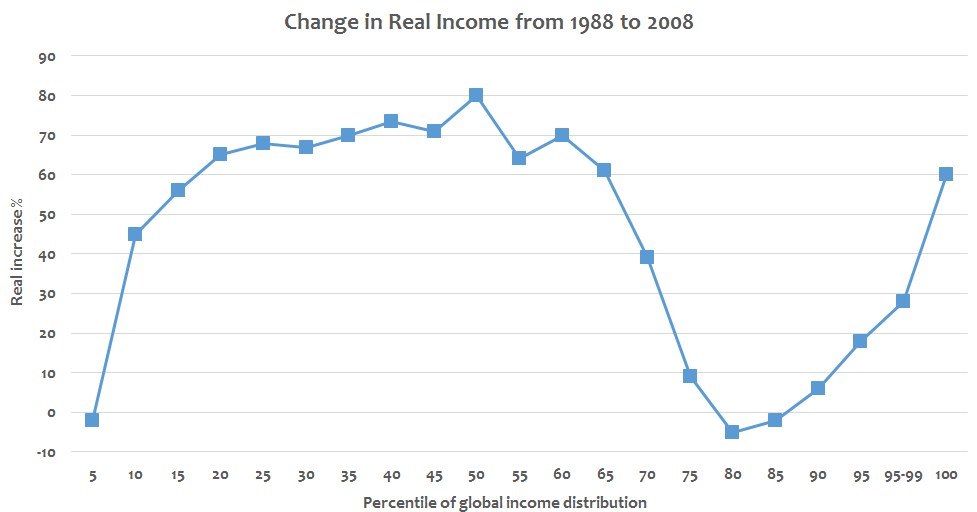
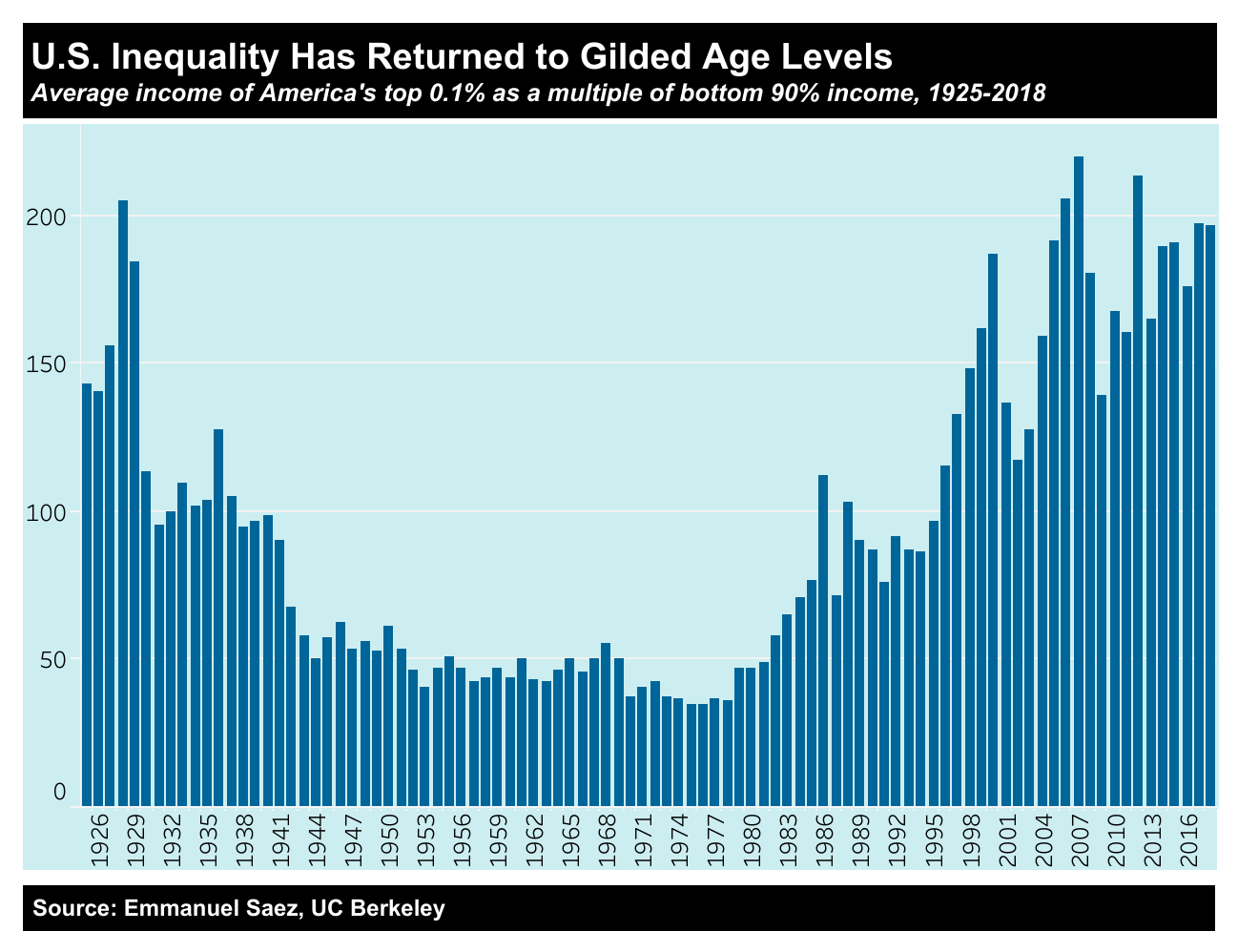
Let us build our discussion on one premise: as contemporary democracies are deeply embedded in capitalist political economies, we will assume that disentrenching capitalism from our societies is, at least for the moment, off the table. This leads us to an unavoidable dilemma: how do we cope with the ever-growing global inequality in our democratic society? Capitalism has been historically linked to inequality as a regime characterised by a systemic cycle of economic accumulation based on the capitalisation of wage labour, ultimately turning vicious: the rich get richer, and the poor get poorer. Wallerstein, in his analysis, underlines how the capitalist world economy is both a cause and a consequence of modern state formation, which explains the expansion of capitalism and industrialisation into the international system, notably in the form of modern imperialism and colonialism, where the global division of labour could only be realised through the establishment of strong states in the core and weak states in the periphery. Crucially, this “uneven geographical expression of the social relations of production” also happens within a state and not only between them. While the concept of global income inequality has been best exemplified in Milanovic’s elephant curve, this trend shows heavy national symptoms across different economic indicators (not only wages but also economic security, wealth, and business concentration), as, to quote one statistic, the wealthiest 1% in the US makes nearly 139 times as much as the bottom 20%.
Striking power asymmetries are noticeable the moment we step into our workplaces or engage with the institutions that manage our economic lives. Inequality fundamentally boils down to a power distribution issue, where interests concentrated at the top dominate at the expense of the societal bottom’s well-being. That is why we must shift our focus from economic indicators to the overall governance of our economy. The critical democratic question thus becomes: who has the power to influence our financial life, and how is this power exercised? Who actually profits from the status quo? Historically, power has been defined as the ability to shape outcomes to one's benefit. It includes material resources and intangible behavioural influences, both of which tend to be unevenly distributed. This imbalance is characteristic of our current economic systems, with the predominance of capital over labour, shareholders over stakeholders, and corporate interests over community well-being. In our modern context, political power is translated into economic clout under these conditions, further entrenching inequality. As money and power accumulate in the top layers, the political landscape becomes increasingly dominated by these concentrated interests and undemocratically insulated from accountability.
Political theorists of capitalism and democracy have long warned that such material inequalities undermine the very conditions for democratic self-government. Robert Dahl, for example, argues that large disparities in the ownership and control of enterprises generate parallel inequalities in citizens’ capacity to influence political decisions, and that extending democratic principles into the economic order is necessary to sustain political equality. Empirical work on policy responsiveness in the United States likewise shows that when the preferences of affluent citizens diverge from those of the middle and working classes, policy outcomes tend to reflect the former far more than the latter, revealing how capitalist wealth structures can distort democratic responsiveness. In this sense, the uneven distribution of economic resources we observe under capitalism is also an uneven distribution of political voice and influence within formally equal polities.
Academics and political activists alike have recognised this cycle as an intrinsic threat to democracy: power brings political influence, and political influence, in turn, consolidates power. The Realizing Democracy initiative proposes three key solutions to democratizing economic power: worker participation and control, stakeholder representation in governance, and reforms in financial and corporate institutions. Far from being abstract ideas on a chalkboard, these solutions offer tangible avenues to breaking the imbalance. Take worker participation and ownership. Models such as Germany’s co-determination (Mitbestimmung), where workers share decision-making power on supervisory boards, Employee Stock Ownership Plans (ESOPs), and profit-sharing initiatives are practical steps that redistribute wealth and dignity back to workers. They offer employees a meaningful stake in their workplaces and realign corporate decision-making to better serve the broader community. The interest here is clear: empowering workers directly counters the dominance of elite corporate interests that disproportionately benefit from current economic arrangements. Beyond these reforms within existing corporate structures, traditions of autogestion and anarchist thought push the critique further: they envision workers collectively owning and self-managing enterprises in decentralised, often federated networks that seek to replace hierarchical corporate and state control alike. In these perspectives, economic democracy is not only about constraining capital’s power, but also about reorganising production itself through horizontal association and bottom-up coordination.
Equally critical, is stakeholder representation. Envision boards of directors being compelled to include shareholders, employees, consumers, and local citizens whose lives are directly affected by corporate decisions. Inclusive governance makes accountability more than just maximising profits. Such structures revolutionise decision-making to make it more community- and society-centric. And once more, we must ask ourselves cui bono: exclusionary practices serve entrenched financial interests; broader representation disrupts this imbalance and promotes equitable outcomes. Finally, Institutional reforms also hold immense promise in this regard. Public investment banks, cooperative ownership structures, and investor democracy, with elected investment fund managers accountable to their beneficiaries, counter the current trend of power concentration in the financial sector. Reworking financial institutions to align with broader public interests confronts the entrenched power bases driving inequality.
Critics will say that insurmountable obstacles doom such democratisation efforts. Specifically, cultural resistance, deep-seated legal institutions, and resistance from those most advantaged by current arrangements. But it is precisely these obstacles that highlight the need for action. Power, interests, and ideas are interwoven: changing one requires changing all. Power seldom surrenders voluntarily. It needs deliberate, calculated intervention. The power of economic elites maintains a status quo that serves their narrow interests, backed by ideas and narratives, such as neoliberalism, which is boosted by mass media that the elites themselves own, thereby justifying their dominance. That is why democratising the economy is not only desirable, but imperative, regardless of the difficulties in reversing the status quo. It is self-evident how much this matters. Economic decisions are not just figures on balance sheets: they make or break the environmental sustainability, cohesion, and democratic health of our societies.
Democratising the economy is a prerequisite for democracy - and a bulwark of democratic renewal.
Political democracy cannot thrive where economic power is highly concentrated and largely unaccountable. Robust evidence shows that policy responsiveness skews toward economic elites and organized business interests, with average citizens exerting little independent influence - a pattern fundamentally at odds with democratic equality. At the same time, we are living through an “illiberal turn” with freedom and democratic standards declining for years on end, and autocratisation widening globally. Against this backdrop, democratising the economy - so that those affected by economic decisions share in governing them - is not a peripheral aspiration but a precondition for democratic resilience. As Realizing Democracy argues, the project of democratic renewal must move beyond procedural fixes and rebalance power in workplaces, corporations, and finance. Concretely, that means: (i) worker participation and control, (ii) governance that represents stakeholders (not only shareholders), and (iii) reform of financial and corporate institutions to make them accountable to the people they serve. It also highlights policy avenues such as co-determination, cooperative and municipal ownership, public investment banks, and investor democracy (e.g., elected fiduciaries for large asset pools) as levers to realign incentives and power with democratic goals.
From boardrooms to shop floors: worker ownership and participation.
A sizable empirical literature indicates that employee ownership and profit-sharing can improve performance and align incentives without sacrificing efficiency. Meta-analyses and major reviews find small but statistically significant positive associations between broad-based employee ownership and firm performance, with complementary HR practices strengthening the effect. Evidence from Germany’s co-determination framework - board-level worker representation and works councils - suggests that such participation does not harm productivity or profitability, and in some settings is associated with neutral-to-positive outcomes and fairer within-firm wage structures. A paradigmatic illustration is the Spanish Basque Country’s Mondragón Corporation, a federation of worker cooperatives that has demonstrated resilience through crises via job‑sharing, redeployment across co-ops, and democratic governance (e.g., elected worker councils and general assemblies). Studies document more stable employment and wage flexibility in downturns, alongside mechanisms (inter-cooperative solidarity funds, mutualised support) that preserve both jobs and productive capacity. Mondragón’s experience shows that cooperative ownership can operate at scale, compete globally, and institutionalise democratic practice inside the firm. Italy’s Emilia-Romagna region likewise underscores the macro potential of cooperative ecosystems: cooperatives account for roughly 13% of regional employment, embedded in dense producer networks and supported by constitutional recognition and enabling laws, demonstrating how cooperative ownership can anchor inclusive growth when policy scaffolding is in place. Another Italian example of successful cooperative ownership of economic activities is Florence’s GKN workers – Collettivo di Fabbrica, where workers effectively raised capital and mobilised alliances to counteract the imposed shutdown of their industry complex in 2021 and redirect the industrial production towards eco-friendly goods.
Socio-democratic impact of stakeholder governance, public‑purpose finance, and Community Wealth Building models
Embedding stakeholder voice in corporate governance strengthens accountability beyond quarterly returns. Research on board-level employee representation across Europe reveals. Other studies link representation to lower tax avoidance, consistent with longer-term, reputationally sensitive strategies. Public investment banks and mission-oriented finance can democratise capital allocation when transparently governed and bound to public‑purpose mandates. Germany’s KfW, based on Responsible Finance principles and operating at arm’s length but under democratic oversight, functioned as essential public infrastructure during the COVID-19 pandemic, rapidly mobilising credit for productive capacity and social resilience. More broadly, the “entrepreneurial state” literature documents the state’s historic role in seeding and steering innovation, while arguing for institutional designs that socialise rewards commensurately with socialised risk. Democratising this entrepreneurial role also depends on radical transparency over public budgets and spending. Experiments such as Greece’s Διαύγεια (Diavgeia, “Clarity”) programme, introduced in 2010 under the PASOK government elected in 2009, require laws, administrative acts, and many expenditure-related decisions to be posted on an online portal before they can take legal effect, enabling citizens and civil society to scrutinise the use of public funds. At the EU level, debates around the implementation of the NextGenerationEU fund have highlighted both the promise and the current shortcomings of such transparency: Nicolaïdis, for instance, calls for a “democratic panopticon” in which project-level spending data are made visible and accessible so that taxpayers and watchdogs can continuously monitor how common resources are used. Strengthening institutions tasked with exposing corruption and maladministration - such as the European Anti-Fraud Office (OLAF), which investigates fraud, corruption, and other offences affecting the EU budget and helps develop EU anti-fraud policy, and the European Ombudsman, which investigates maladministration and promotes transparency and good administration in EU institutions - likewise forms part of this architecture. Alongside them, public-interest advocacy networks and “good lobby” professionals, such as those organised through The Good Lobby, work to equalise access to power by supporting nonprofits, activists, progressive businesses, and philanthropies to participate in EU policymaking in a more transparent, ethical, and accountable way.
A complementary vector is investor democracy: public pension and sovereign funds are massive, long-horizon owners. Where beneficiaries elect trustees (e.g., California Public Employees’ Retirement System - CalPERS), asset‑owner voice can be channelled toward accountability on executive pay, labor standards, and long-term value creation - an emerging counterweight to short-termism. Economic democracy also scales territorially. Community Wealth Building (CWB) strategies, which include local procurement by “anchor” institutions, cooperative and municipal ownership, and social‑value frameworks, have produced measurable gains. According to peer-reviewed public health evaluations, the Preston Model in the UK is associated with improvements in mental health, well-being, and local wages. Implementation documents outline how coordinated procurement, local supply chain development, and support for cooperatives circulate wealth locally, making growth more inclusive and resilient. In the US, Evergreen Cooperatives in Cleveland, built around hospital and university purchasing, illustrates how anchor-led procurement can incubate worker-owned firms that create quality jobs for disadvantaged residents.
Taking stock of economic democracy: an alternative to neo-statism in an illiberal era
Doubling down on the “entrepreneurial state” conception, the alternative on offer in many places is neo-statism: the consolidation of state power over key economic levers without commensurate democratic checks - often expressed as illiberal state capitalism. Scholars tie the rise of such models to the broader wave of autocratisation and illiberal governance. Taking a bird’s-eye view, major monitors corroborate the trend: the V-Dem Democracy Report 2025 documents 25 years of growing autocratisation, while Freedom House records the 19th consecutive year of global freedom decline. In this environment, economic democratisation is not merely social; it is a security architecture for democracy itself: diffusing power, strengthening accountability, and insulating public life from capture by oligarchic or authoritarian projects. Beyond ballots, democracy requires not only countervailing but empowering forms of power in the economy. The evidence is clear enough to act: worker ownership and participation can raise performance and resilience; stakeholder governance curbs short-termism and abuses, while embedding long-termism; public-purpose finance steers capital toward collective goals; and place-based models, like CWB, demonstrably improve well-being. As we have witnessed, economic democratisation has been proven to have the potential to be both the foundation and the bulwark of democratic renewal, and as such, it must move from theory to policy. Through these practical and structural changes, we democratise power in the economy to better represent everyone's interests, not just the elite’s, essentially taking back control from the few privileged who benefit enormously under the current system. The call to de-rig the economy and break the vicious cycle of inequality to promote a more virtuous, self-reinforcing, inclusive democracy has never been more urgent.