Author:
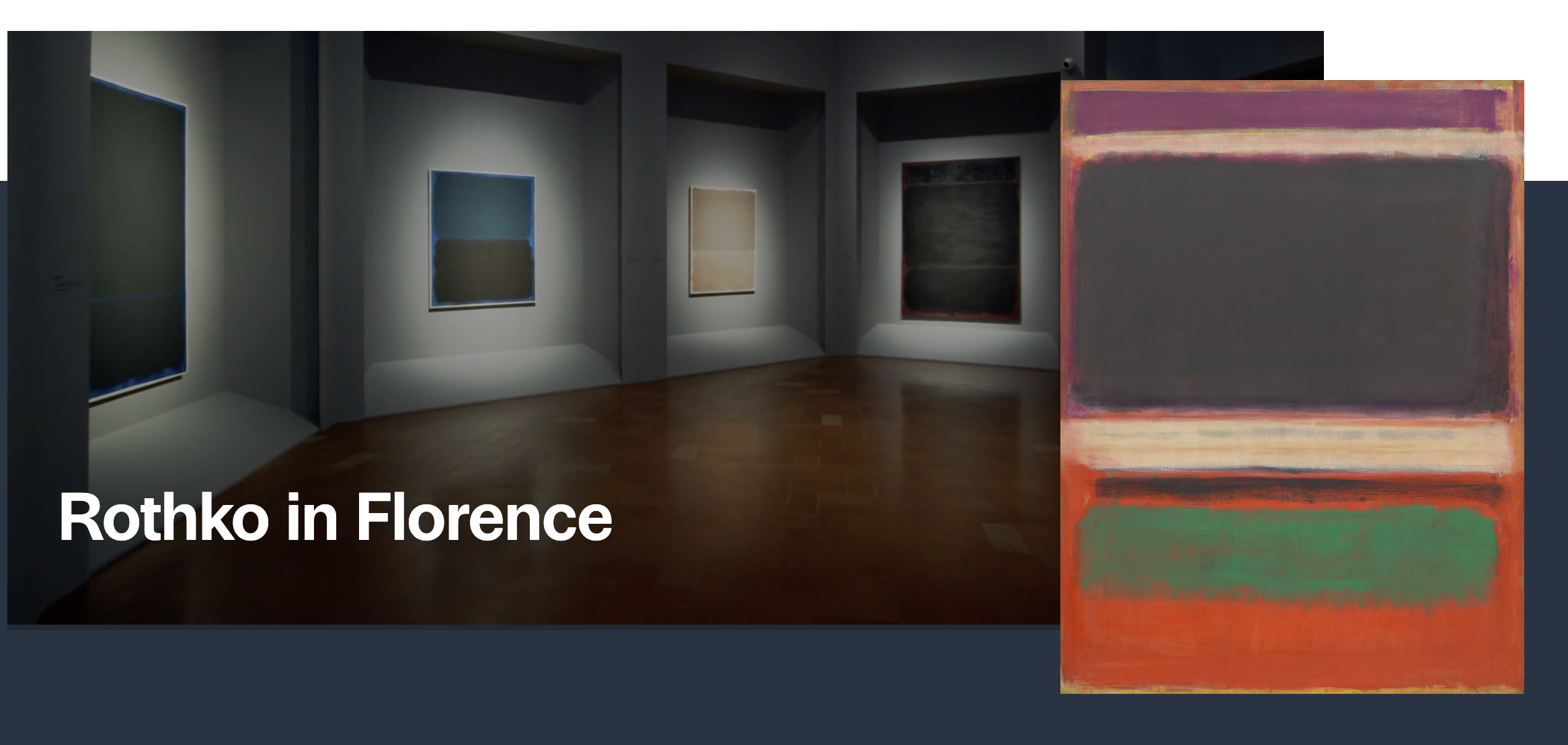
How do you represent something that is hardly depictable? That question hung over a scorching afternoon on 10 July, when around 50 of us from the Institute and beyond gathered at Palazzo Strozzi for a guided tour of Rothko in Florence, followed by a lecture on art, abstraction and violence organized by the Working Group and Istituto Fiorentino di Critica Culturale.
The exhibition brought together works from across Mark Rothko’s career and traced his path from figurative painting to the total abstraction of his famous colour field paintings. It also tells the story of his connection to Florence. Rothko visited the city several times, where he encountered Fra Angelico’s frescoes at San Marco and Michelangelo’s Laurentian Library. The enclosed frescoes within each cell and looming walls of the library left a lasting mark on the immersive spaces he later tried to create with his paintings. Walking through the rooms, it was striking to see how each painting can feel like a window or a door that can, or not, take you to new emotive places.
That shift from figuration to abstraction was also at the heart of the lecture that followed, Abstraction and Violence: Rothko and the Limits of Representation, given by Prof. Brad Evans and the painter Chantal Meza, an Artistic Fellow at the University of Bath. They explored the difference between seeing violence and witnessing it, and asked what role art like Rothko’s might play in bridging that gap but also how to maintain it. Along the way, the discussion turned to the many forms abstraction can take, and to how we might theorize and historicize them.
The event was co-organized with the Visual and Material History Working Group, which brought a historian’s questions into the room. Can a painting or image count as evidence of past violence? If so, how should we read it? And where does the artist’s own life and history fit into the story we tell?
Seen from a distance, this was an afternoon about art history. But it also showed how an exhibition can bring together researchers from across the Institute to think about Rothko, evidence and memory in new ways.